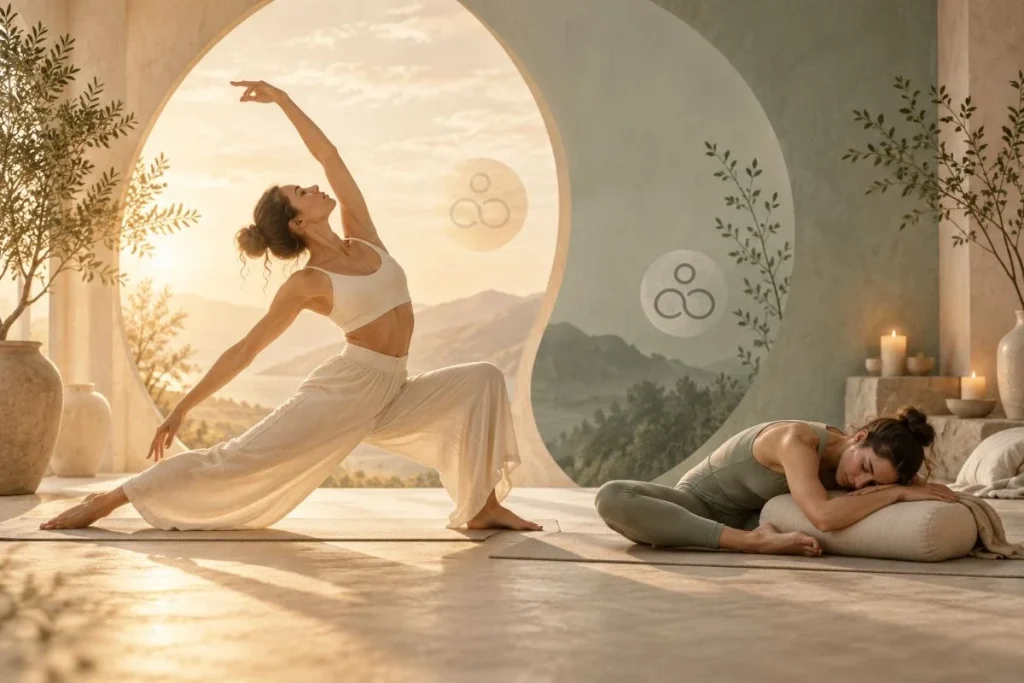
Yin Yang Yoga combines two complementary styles of yoga: Yin, a slow and meditative practice involving longer-held stretches, and Yang, an active practice focused on movement, strength and stability. Together, they encourage flexibility, muscular strength, mindfulness and relaxation, helping practitioners experience both physical activity and restful stillness within one session.
What is Yin Yang Yoga? Benefits, Poses & Beginner’s Guide
Modern life rarely offers an ideal balance between activity and rest. Long working hours, busy commutes, screen time and demanding routines can leave people feeling physically tense or mentally exhausted. While some forms of exercise emphasise strength and movement, others concentrate on recovery and relaxation. Yin Yang Yoga brings both approaches together.
This combined yoga style offers a flexible way to explore movement without overlooking the importance of rest. Rather than treating energetic exercise and quiet reflection as competing priorities, it recognises that each has a valuable place in a balanced routine.
Whether you are attending a yoga studio in the UK, following an online class or exploring yoga at home, understanding the principles behind Yin Yang Yoga can help you choose a practice suited to your experience and goals.
Understanding the Meaning of Yin and Yang in Yoga
The concepts of Yin and Yang originate from Chinese philosophy, particularly Taoist traditions. They represent complementary qualities that exist in relation to one another. Neither is considered inherently superior, and both contribute to an overall sense of balance.
Yin is traditionally associated with stillness, coolness, receptivity and inward attention. Yang represents activity, warmth, movement and outward expression.
These concepts are not strict opposites. Instead, they describe qualities that continually interact and change. A physically demanding activity may contain moments of calm, just as a restful experience can involve subtle movement and awareness.
In yoga, these principles provide a useful framework for combining different approaches to physical practice.
The Yin Element: Stillness and Gentle Stretching
Yin Yoga involves spending longer periods in relatively passive postures, usually performed close to the floor. Practitioners often hold positions for approximately two to five minutes, although beginners may start with much shorter holds.
The intention is to explore comfortable ranges of movement while allowing unnecessary muscular tension to soften. Gentle, sustained positioning places-controlled demands on tissues around the joints, including fascia and other connective structures.
However, deeper stretching does not automatically mean better results. The aim is to find an appropriate level of sensation without forcing the body into uncomfortable positions.
Yin practice also creates opportunities to observe breathing, notice physical sensations and become more comfortable with stillness.
The Yang Element: Movement and Active Strength
Yang Yoga describes the more dynamic qualities of yoga, commonly found in Hatha, Vinyasa and Ashtanga-inspired practices.
Instead of remaining in one position for several minutes, practitioners move between poses, engage muscles and coordinate movement with breathing.
Yang-focused sequences may include standing postures, gentle backbends, balancing exercises, lunges and flowing transitions.
These movements can help develop muscular endurance, coordination, balance and functional strength. The intensity varies considerably, meaning Yang Yoga does not necessarily have to be fast or strenuous.
How Does Yin Yang Yoga Work?
A Yin Yang Yoga class combines active and passive elements to create a varied physical experience. The teacher may begin with a dynamic sequence before introducing longer-held stretches, or reverse the order depending on the purpose of the session.
There is no single compulsory sequence.
A class beginning with Yang movements might gradually increase activity through standing poses, gentle flows and controlled transitions. The practitioner then moves towards seated or reclining Yin positions, allowing the final portion to become slower and quieter.
Alternatively, a Yin-first class can encourage mindful attention before introducing more energetic movement.
The transition matters because it changes how the session feels. Starting with movement and finishing with stillness may be particularly appealing after a busy working day. Beginning slowly can help someone who feels mentally distracted settle into their practice before becoming more active.
Neither arrangement is universally better. The most suitable structure depends on individual preferences, mobility, experience and the intended outcome.
Yin Yoga vs Yang Yoga: Key Differences
Although both approaches belong within a wider yoga practice, they use movement, muscular activity and posture duration differently.
|
Feature |
Yin Yoga |
Yang Yoga |
|
Pace |
Slow and largely stationary |
Dynamic or actively controlled |
|
Posture duration |
Often 2–5 minutes |
Usually, seconds or several breaths |
|
Main emphasis |
Passive positioning and mindful stillness |
Strength, movement and stability |
|
Muscular engagement |
Generally reduced |
Actively engaged |
|
Common positions |
Seated, reclining and supported |
Standing, balancing and flowing |
|
Breathing |
Natural, relaxed observation |
Often coordinated with movement |
|
Equipment |
Mats, cushions, blankets and bolsters |
Mats, blocks and sometimes straps |
|
Overall experience |
Quiet and reflective |
Active and energising |
These differences explain why combining the two can provide a varied experience. Each approach develops different aspects of physical awareness, and neither needs to replace the other.
Benefits of Yin Yang Yoga for Physical and Mental Wellbeing
The main benefits of a combined practice come from bringing different forms of movement into one routine rather than relying exclusively on either intensity or stillness.
Supports Flexibility and Comfortable Movement
Yin positions encourage practitioners to spend time exploring a manageable range of motion. When performed consistently and without excessive force, stretching activities can contribute to improved flexibility.
The active Yang component complements this by encouraging controlled movement through available ranges. Developing strength alongside flexibility is particularly useful because being able to move into a position is different from being able to control it.
Someone who spends much of the working day sitting may find the combination helpful for maintaining comfortable everyday movement.
Develops Muscular Strength and Balance
Standing poses, lunges and controlled transitions challenge muscles to support body weight. Repeated practice can improve balance, muscular endurance and coordination.
The NHS recognises yoga as an activity that can contribute to muscle strengthening, although the extent depends on the exercises performed and their intensity.
A gentle session dominated by passive stretching will not necessarily provide the same strengthening stimulus as an active, appropriately challenging sequence.
Encourages Relaxation and Stress Management
Longer periods of stillness create opportunities to slow down and pay attention to breathing.
For some practitioners, this change of pace may help reduce feelings of tension and encourage a calmer state of mind. Mindful movement can also make it easier to notice habitual patterns, such as holding the shoulders tightly or breathing shallowly during stressful moments.
Yoga should not be considered a substitute for professional mental healthcare, but it may be a useful addition to a wider wellbeing routine.
Improves Body Awareness
Moving between active and passive positions allows practitioners to observe how their bodies respond to different demands.
During Yang movements, attention may naturally turn towards balance, stability and coordination. During Yin holds, awareness shifts towards smaller sensations, breathing and the ability to remain comfortable without constant movement.
Over time, this may encourage more thoughtful movement choices both during yoga and in everyday activities.
Provides Variety Within One Practice
Some people enjoy physically challenging sessions but find extended relaxation difficult. Others prefer gentle stretching yet would benefit from including more active movement.
Combining the two can make a routine more varied and personally satisfying.
This variety may also support consistency, especially for people who struggle to maintain separate exercise and relaxation practices throughout a busy week.
Encourages a More Mindful Approach to Exercise
A central lesson of Yin Yang Yoga is that progress does not always require greater intensity.
Sometimes the appropriate response is to engage muscles and challenge balance. At other times, the more useful choice is to reduce effort, use support or rest.
Learning to distinguish between these needs can encourage a more sustainable relationship with physical activity.
26 Yin Yoga Poses with Pictures: A Practical Posture Guide
The Yin portion of a combined practice includes a variety of seated, reclining and supported positions. These poses commonly focus on the hips, legs, spine, shoulders and surrounding soft tissues.
The following 26 postures provide a broad reference collection rather than a sequence to complete in one session. Names and variations differ between yoga traditions.
- Illustration notes: Each numbered pose is intended to have its own instructional image showing the position, relevant support equipment and safe body alignment.
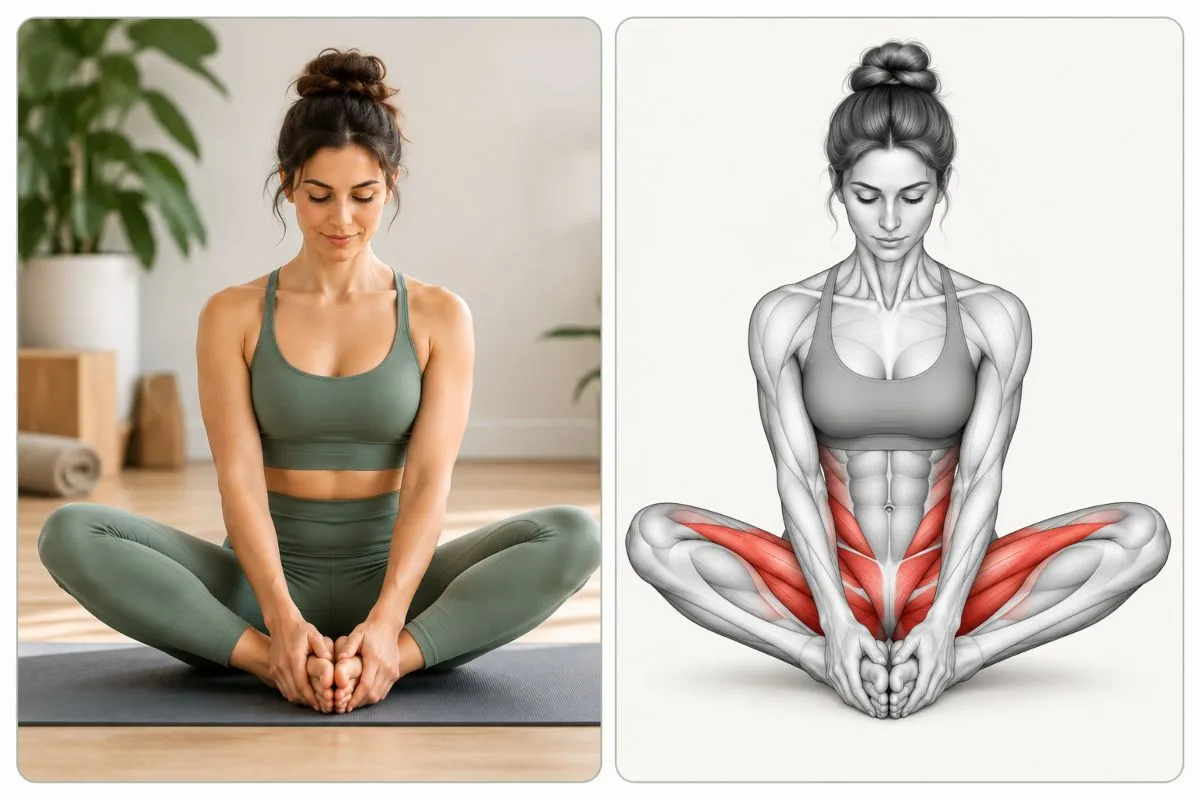
1. Butterfly Pose
Sit with the soles of your feet together and allow your knees to move comfortably outwards. Keep the feet at a distance from the pelvis that feels manageable, and gently lean forwards if appropriate.
This pose explores movement around the hips and inner thighs. Support beneath the knees or sitting bones may make the position more comfortable.
- Suggested beginner hold: 1–2 minutes.
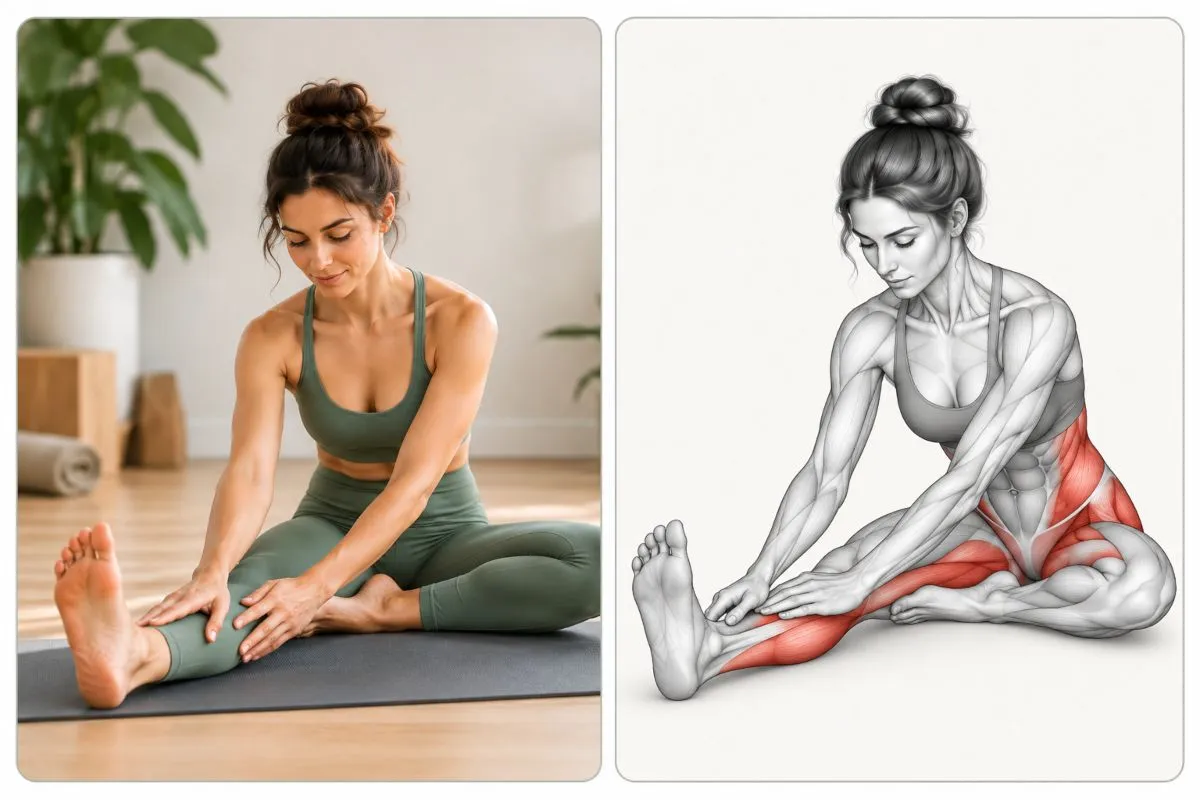
2. Half Butterfly Pose
Extend one leg forwards while bending the opposite knee, resting that foot towards the inner thigh. Lean forwards gently without pulling yourself into the stretch.
Half Butterfly offers a one-sided variation that allows practitioners to notice differences in hip and hamstring mobility.
- Suggested beginner hold: 1–2 minutes per side.
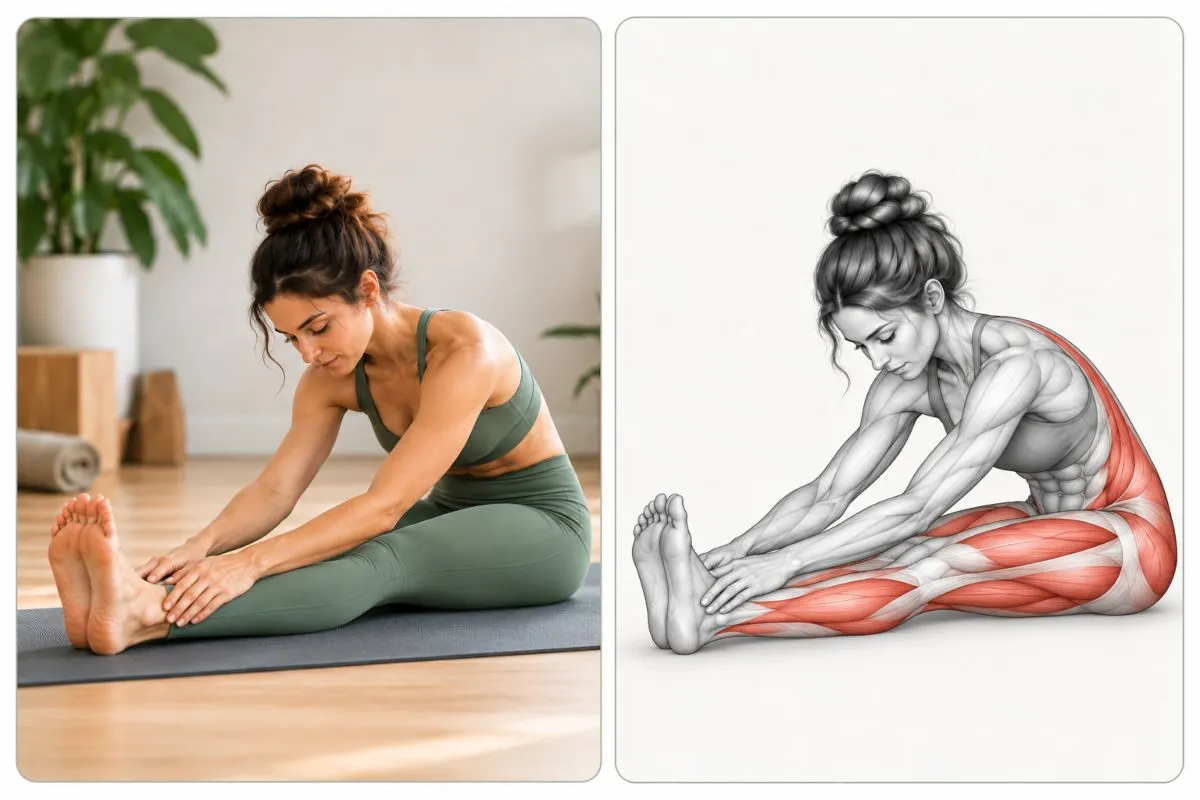
3. Caterpillar Pose
Sit with both legs extended forwards and allow the upper body to fold gently over the legs. A cushion under the knees can help reduce discomfort.
Unlike a strongly engaged seated forward bend, the Yin version invites a more relaxed approach without forcing the spine into a particular shape.
- Suggested beginner hold: 1–3 minutes.
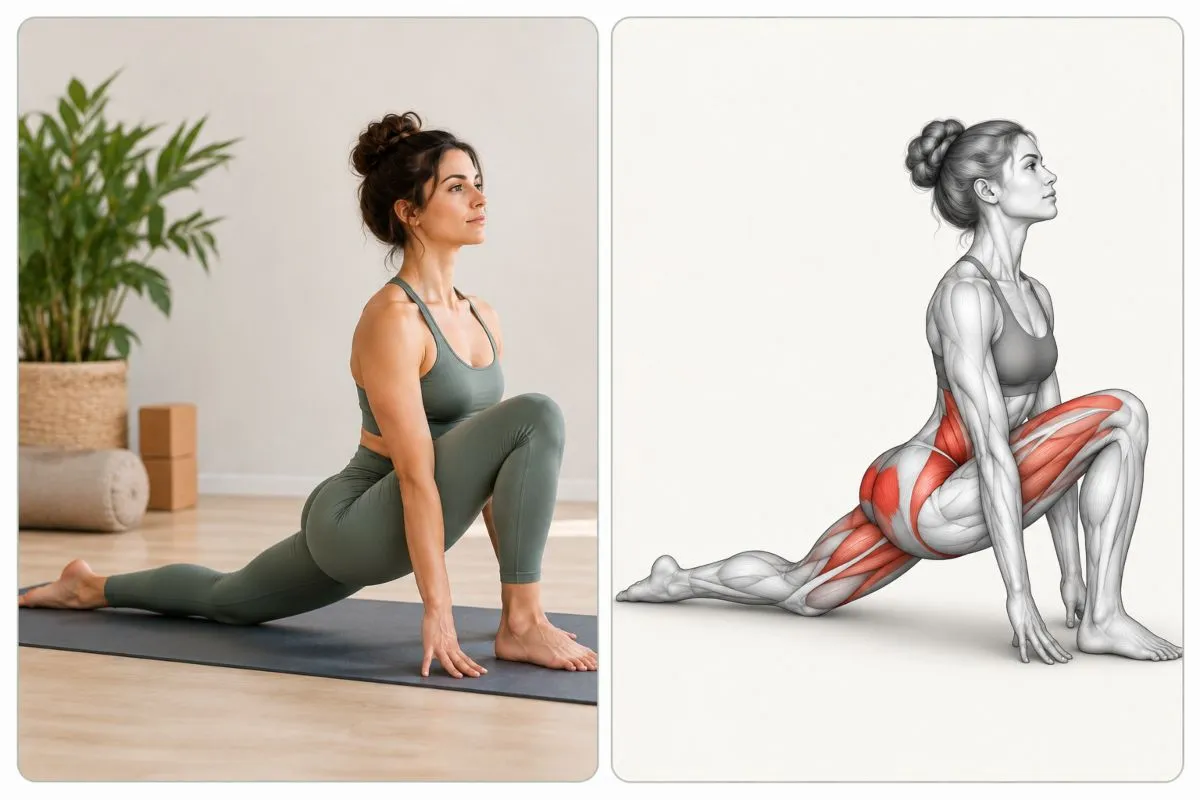
4. Dragon Pose
Begin in a low lunge, with one-foot forwards and the opposite knee resting on a folded blanket. Allow the hips to move forwards only as far as comfortable.
Dragon Pose explores the front of the hip and the muscles around the upper thigh.
- Suggested beginner hold: 45–90 seconds per side.
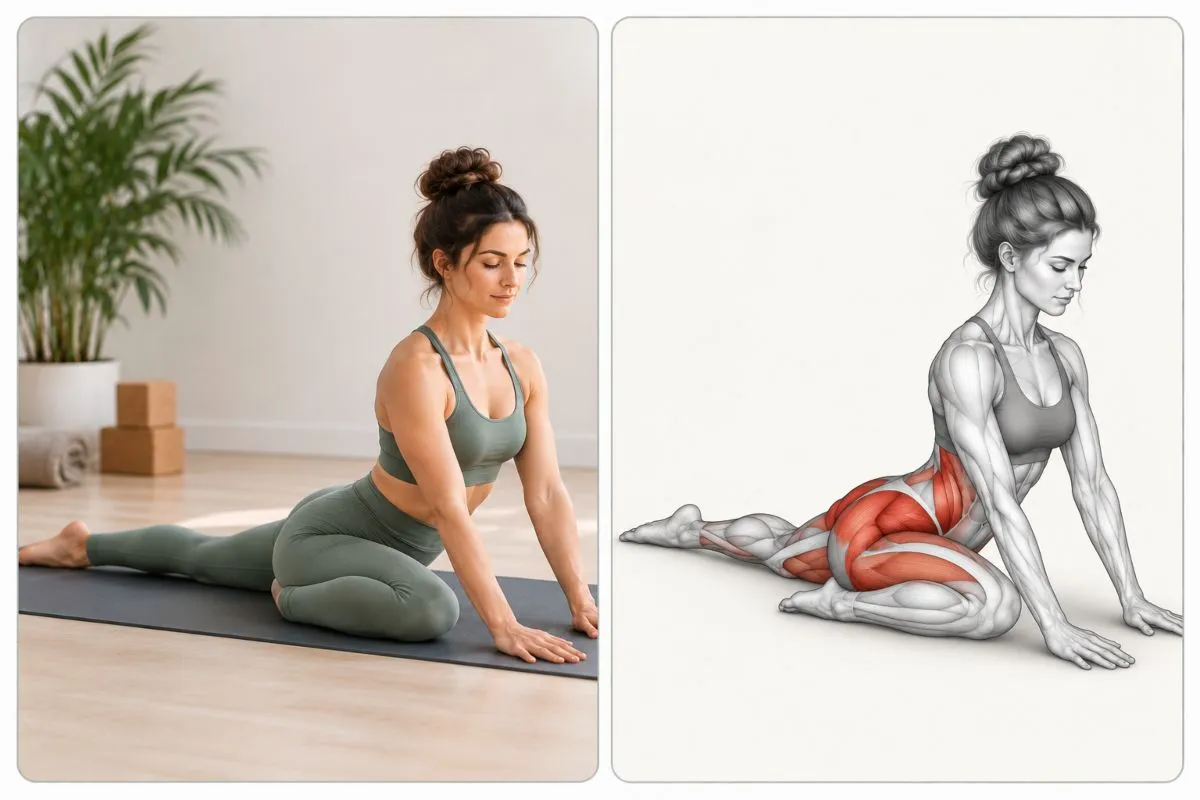
5. Sleeping Swan Pose
From a supported kneeling position, bring one knee forwards into a comfortable angle while extending the opposite leg behind. Use a bolster beneath the pelvis if needed.
This posture resembles a relaxed Pigeon variation and may create sensations around the outer hip. Avoid forcing the front knee or hip into position.
- Suggested beginner hold: 1–2 minutes per side.
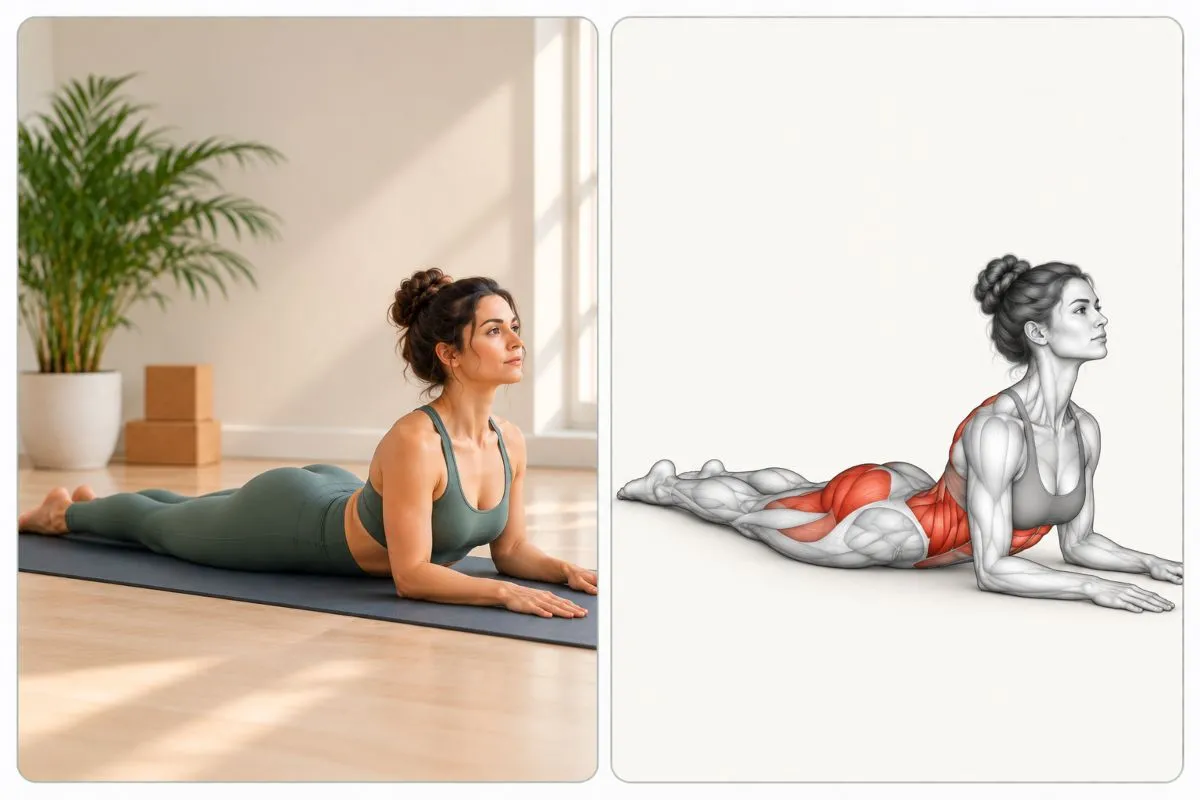
6. Sphinx Pose
Lie on your stomach and place your forearms on the mat, with elbows approximately beneath the shoulders. Gently lift the chest while allowing the pelvis to remain supported.
Sphinx introduces a mild spinal extension. Reduce or leave the posture if it creates pinching or discomfort in the lower back.
- Suggested beginner hold: 1–3 minutes.
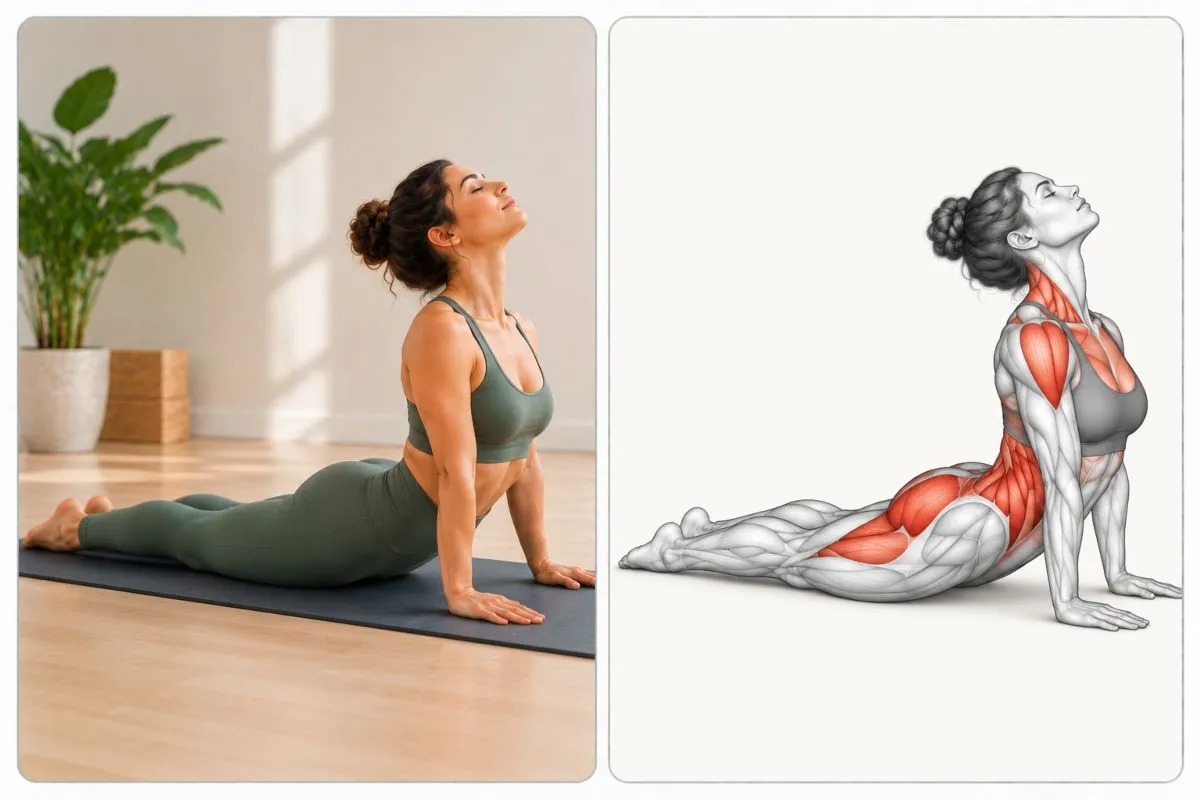
7. Seal Pose
From a stomach-lying position, place the hands forwards and gently straighten the arms to lift the chest further than in Sphinx.
Seal creates a stronger backbend and is not suitable for everyone, particularly those with certain spinal conditions.
- Suggested beginner hold: 30–60 seconds, only when appropriate.
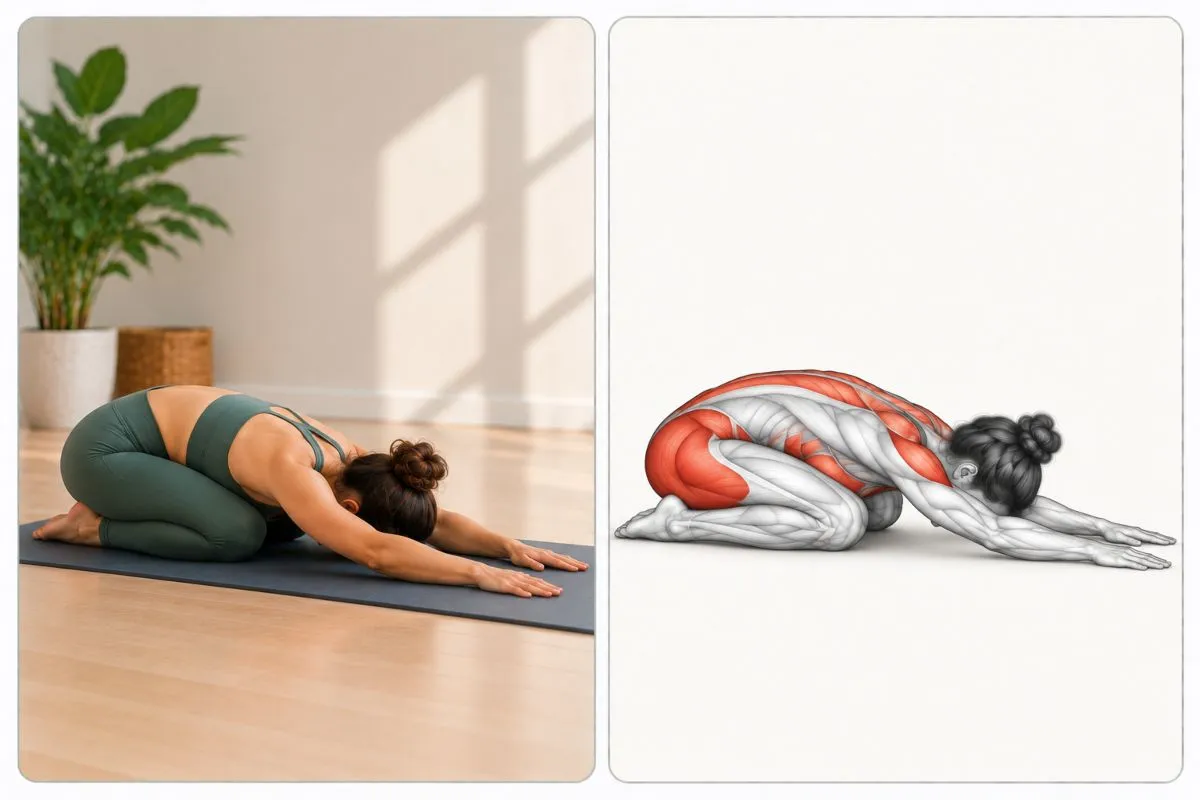
8. Child’s Pose
Kneel on the mat and move the hips towards the heels, allowing the torso to rest forwards. A bolster between the thighs and chest can provide additional support.
This position is often used as a comfortable pause between more demanding exercises.
- Suggested beginner hold: 1–3 minutes.
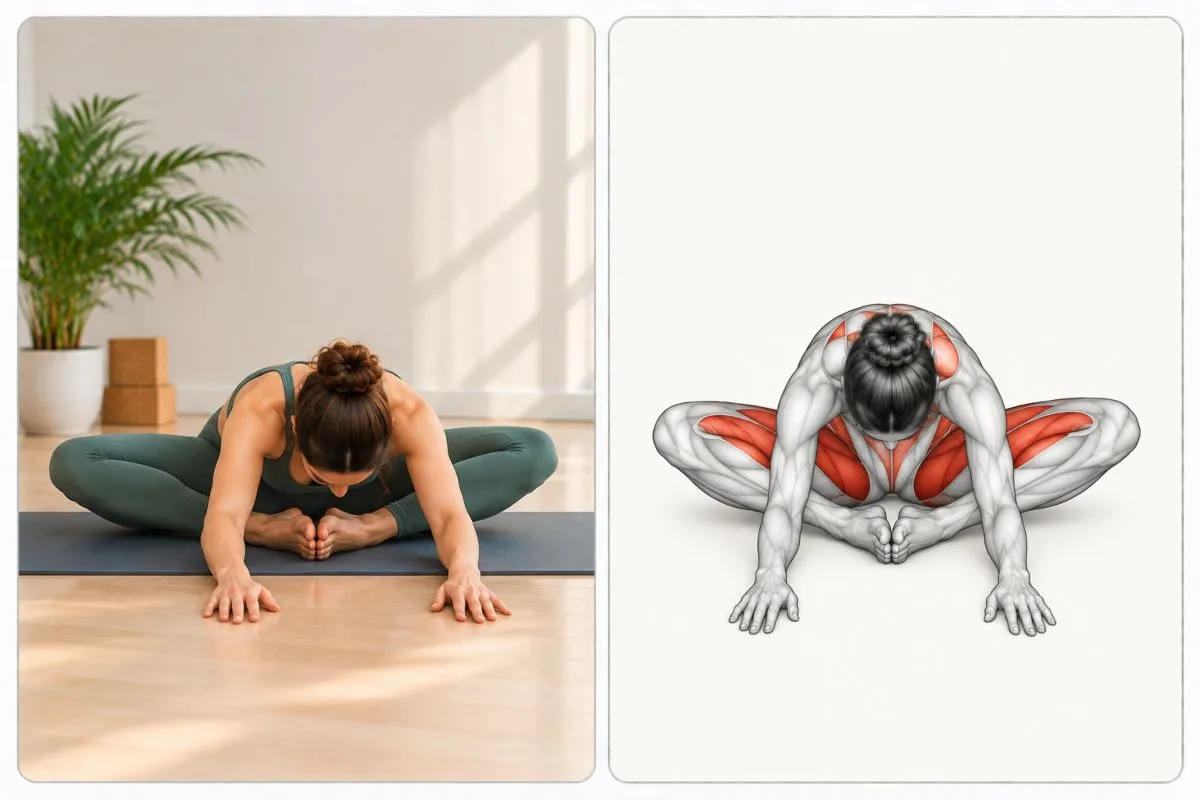
9. Dragonfly Pose
Sit with both legs opened into a comfortable wide position. Remain upright or gradually lean forwards, supporting the chest with a bolster if helpful.
Dragonfly explores the inner thighs and hip movement without requiring an extreme stretch.
- Suggested beginner hold: 1–2 minutes.
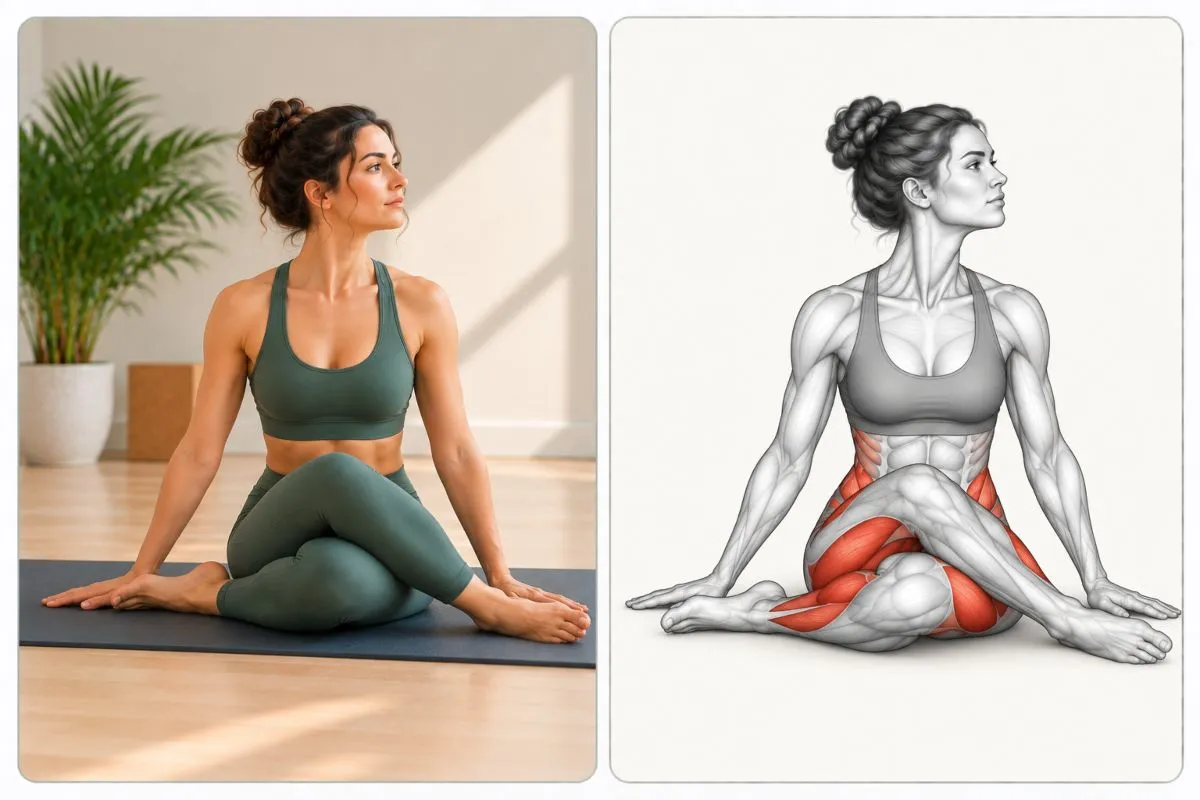
10. Shoelace Pose
Sit with the knees bent and positioned approximately one above the other, keeping the hips supported. A simpler alternative is to sit cross-legged or extend the lower leg.
The posture can create stretching sensations around the outer hips and buttocks.
- Suggested beginner hold: 1–2 minutes per side.
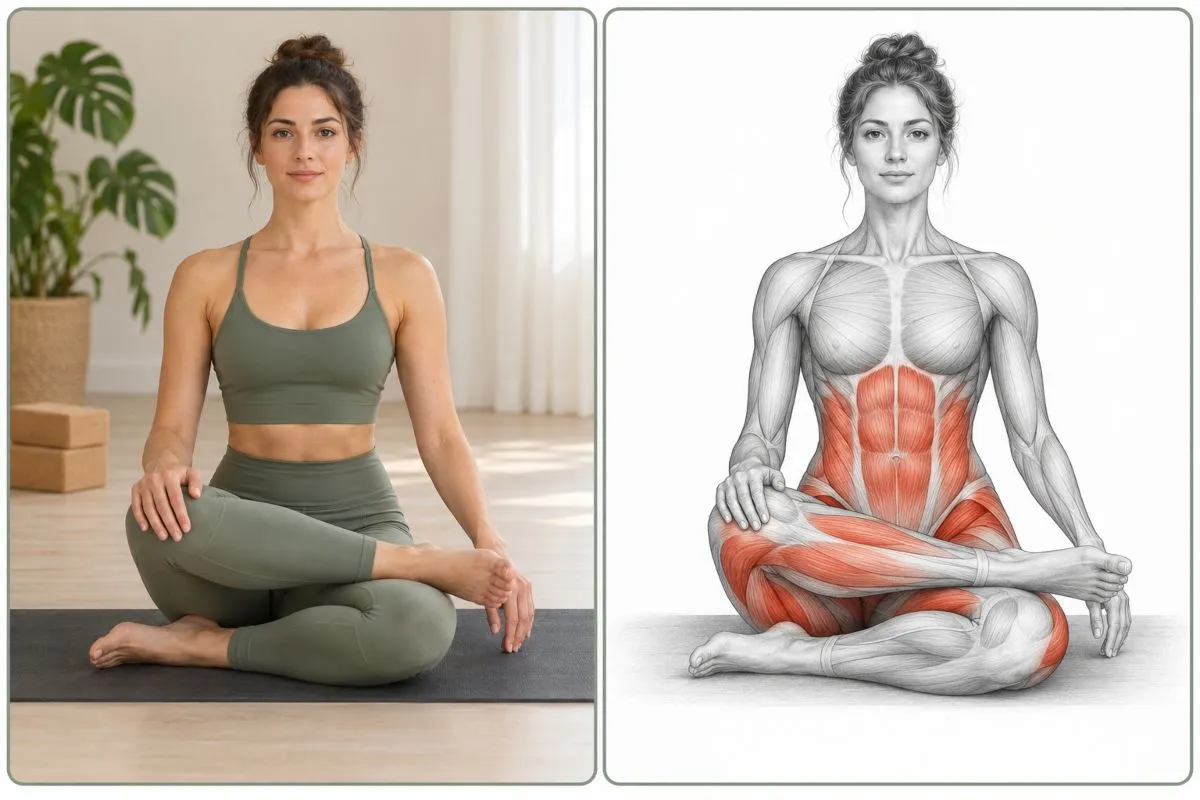
11. Square Pose
Sit with the legs crossed so that the shins form a loose stacked arrangement. Avoid pushing the knees towards the floor.
Square Pose explores external hip rotation. Cushions beneath the knees can help make the position more manageable.
- Suggested beginner hold: 1 minute per side.
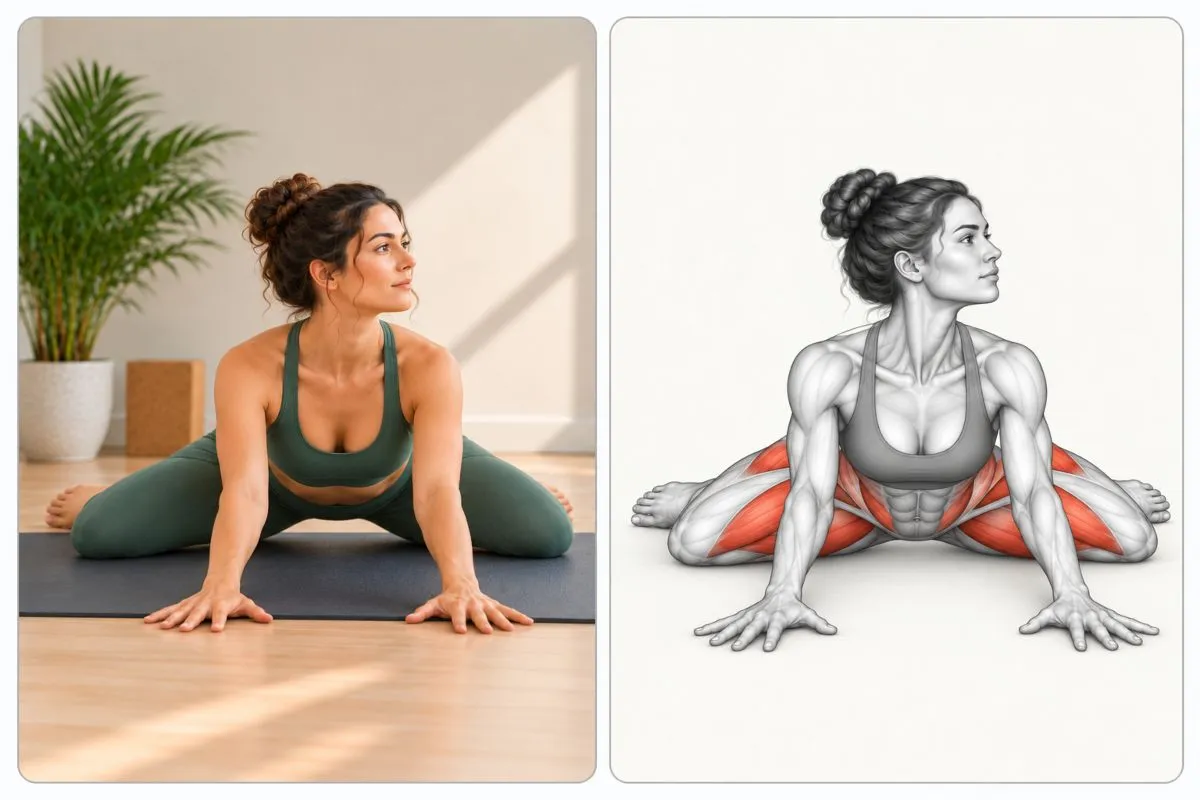
12. Frog Pose
Begin on hands and knees, then gradually move the knees apart while keeping the hips supported. Place blankets beneath the knees and avoid forcing the legs wider.
Frog can be intense around the inner thighs and hips, making careful positioning especially important.
- Suggested beginner hold: 30–90 seconds.
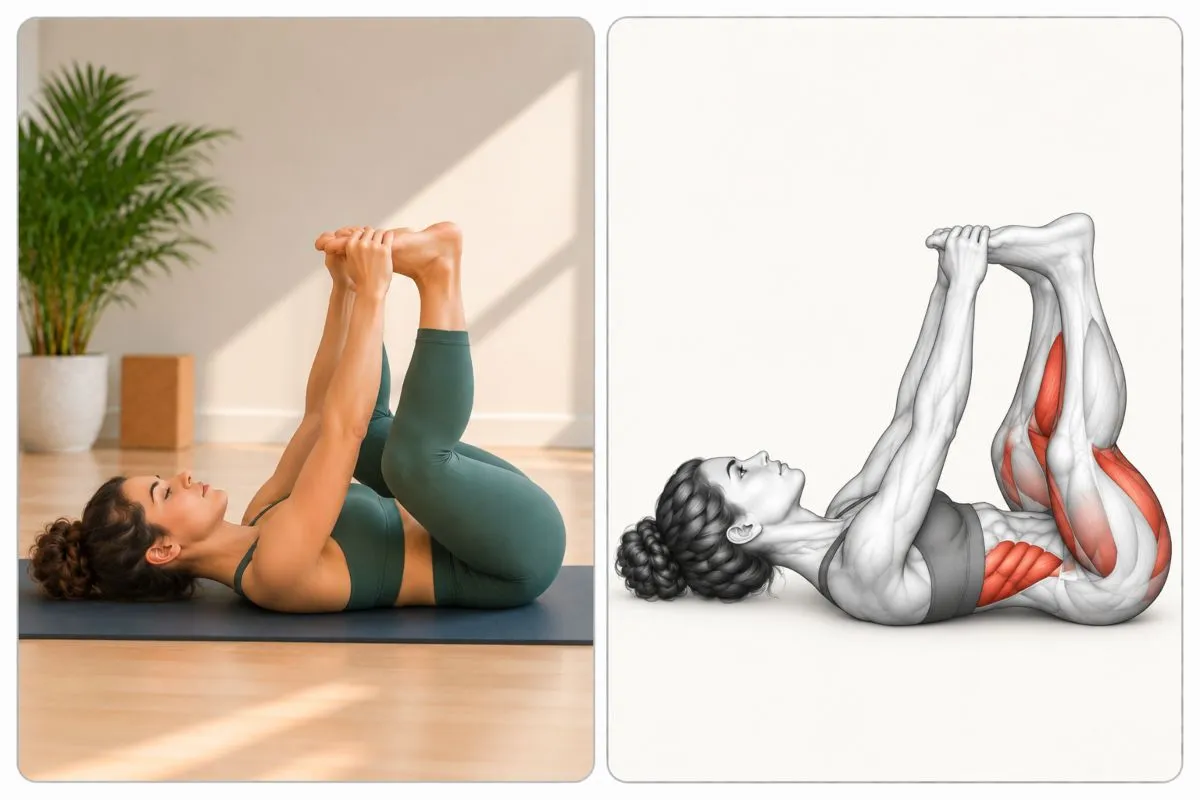
13. Happy Baby Pose
Lie on your back, bend both knees towards the chest and gently hold the backs of the thighs, ankles or feet.
Keep the lower back comfortably supported rather than pulling the legs down aggressively.
- Suggested beginner hold: 1–2 minutes.
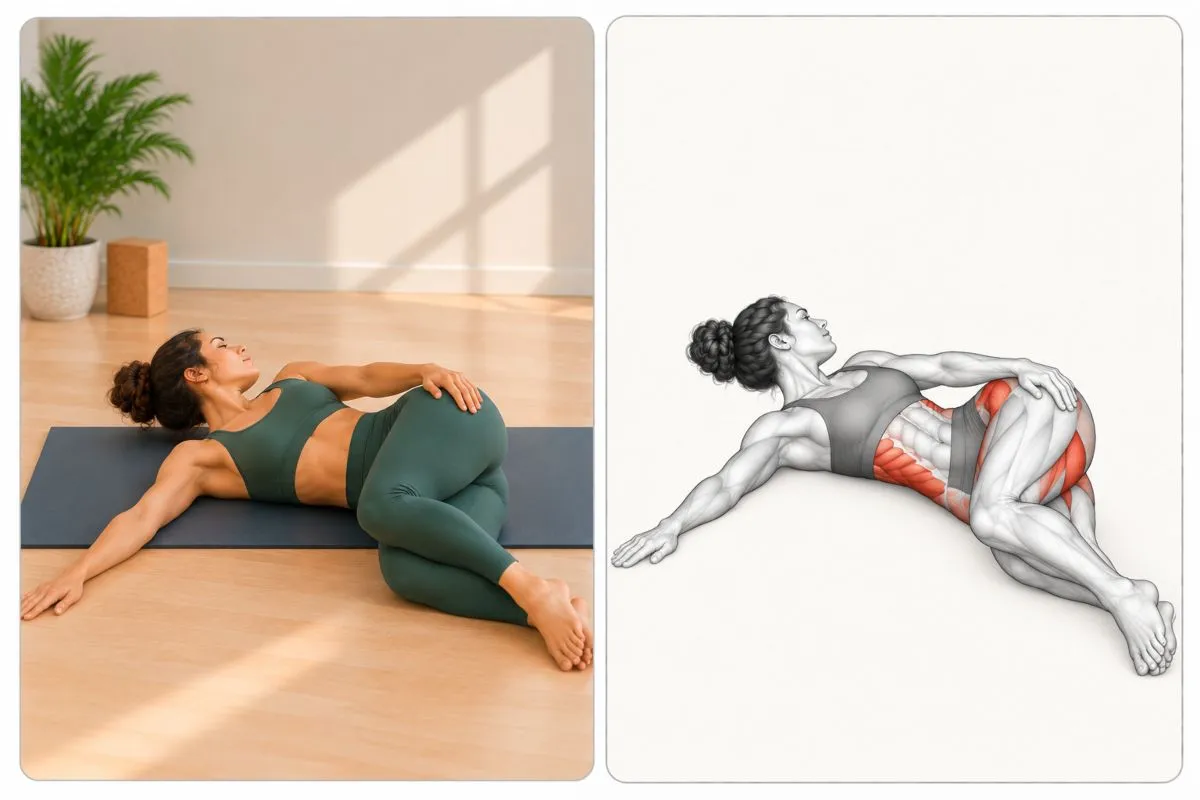
14. Reclining Twist
Lie on your back and gently guide bent knees towards one side while keeping the movement comfortable. A cushion beneath the knees can reduce strain.
This posture encourages gentle spinal rotation and provides a quieter transition between positions.
- Suggested beginner hold: 1–2 minutes per side.
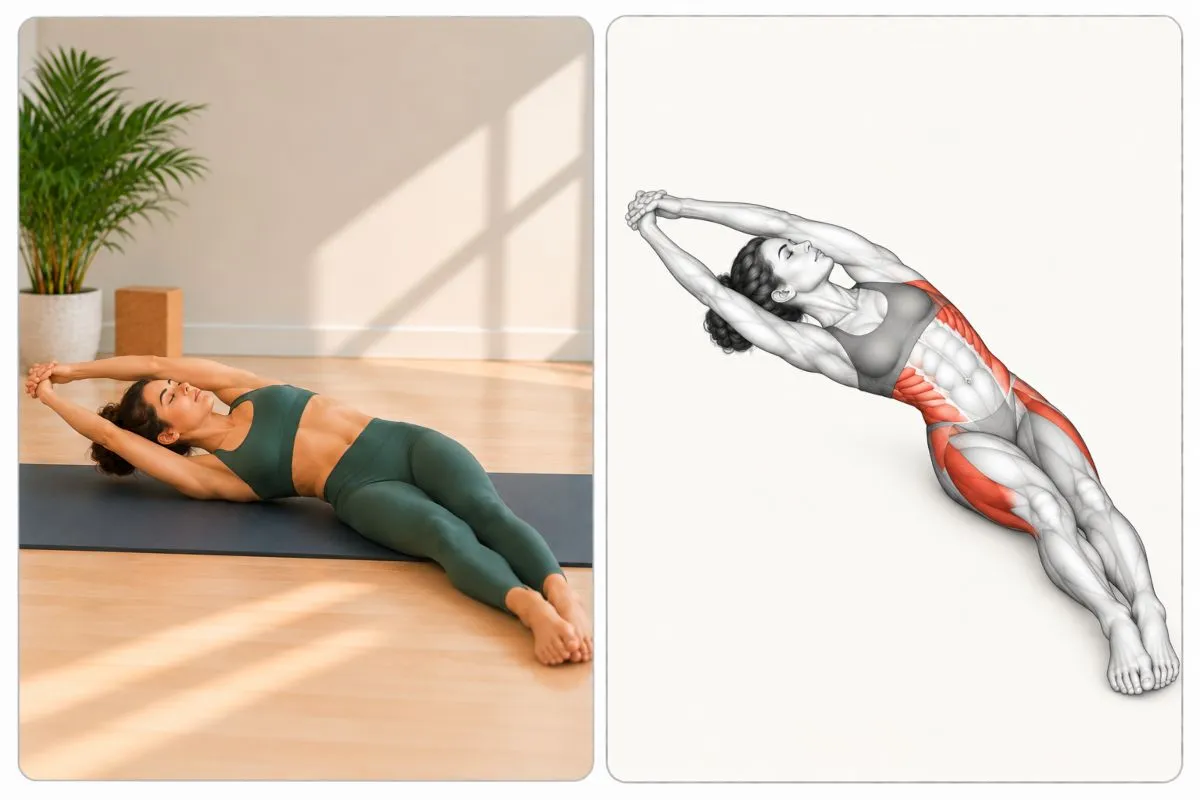
15. Bananasana Pose
Lie on your back with the arms and legs extended comfortably. Move the feet and upper body slightly towards the same side, creating a gentle curved shape.
Bananasana explores the side of the torso without requiring a seated or standing stretch.
- Suggested beginner hold: 1–2 minutes per side.
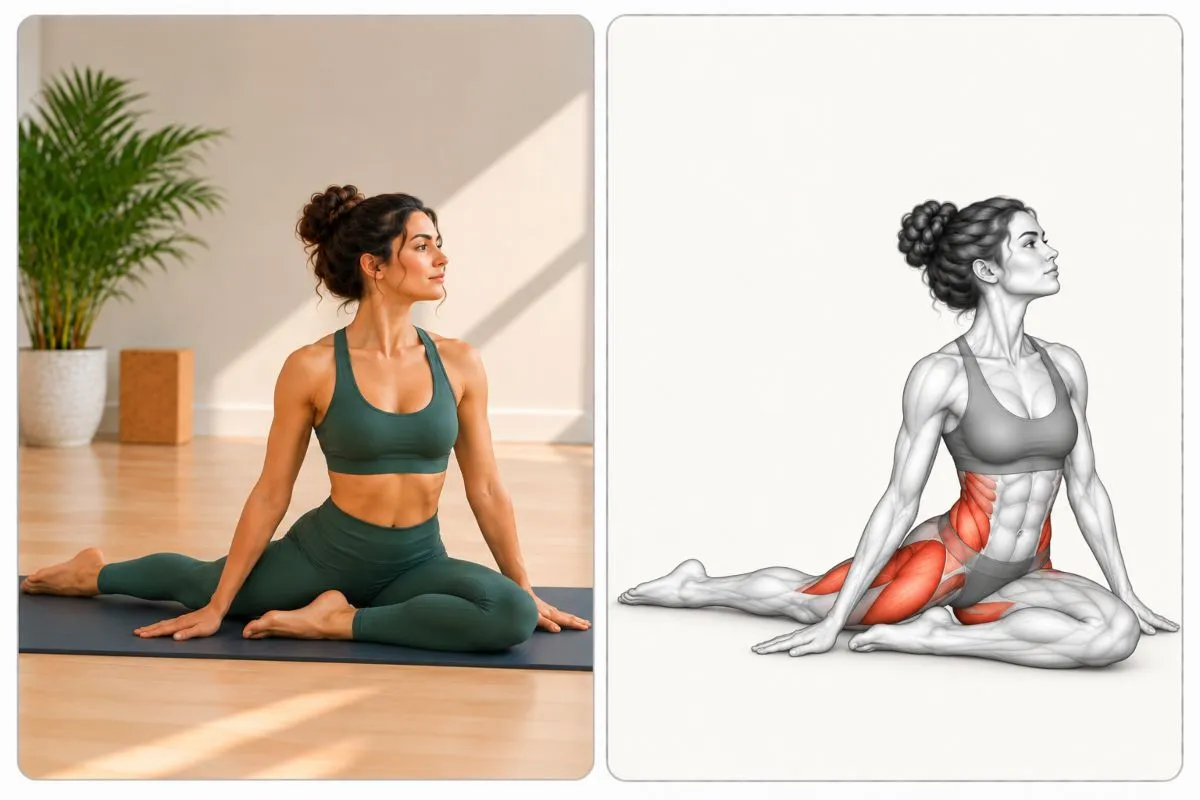
16. Deer Pose
Sit with both knees bent, arranging the legs on opposite sides of the body in a comfortable seated position. Support the hips if necessary.
Deer Pose allows different rotational movements around the hips. The position should never create sharp knee discomfort.
- Suggested beginner hold: 1–2 minutes per side.
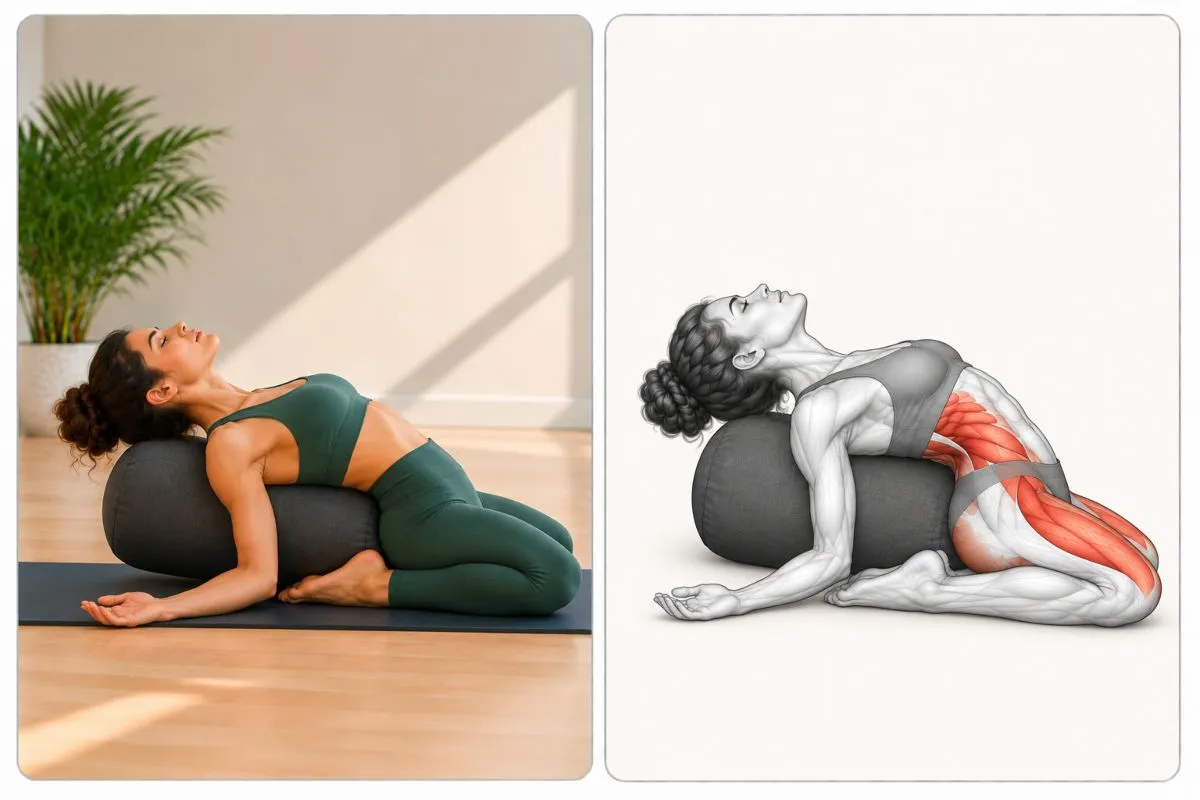
17. Saddle Pose
Begin kneeling with the feet comfortably positioned around the hips. Some experienced practitioners gradually lean backwards with appropriate support.
This can place considerable demands on the knees, ankles and lower back, so it is not a standard beginner requirement.
- Suggested hold: Individualised under qualified instruction.
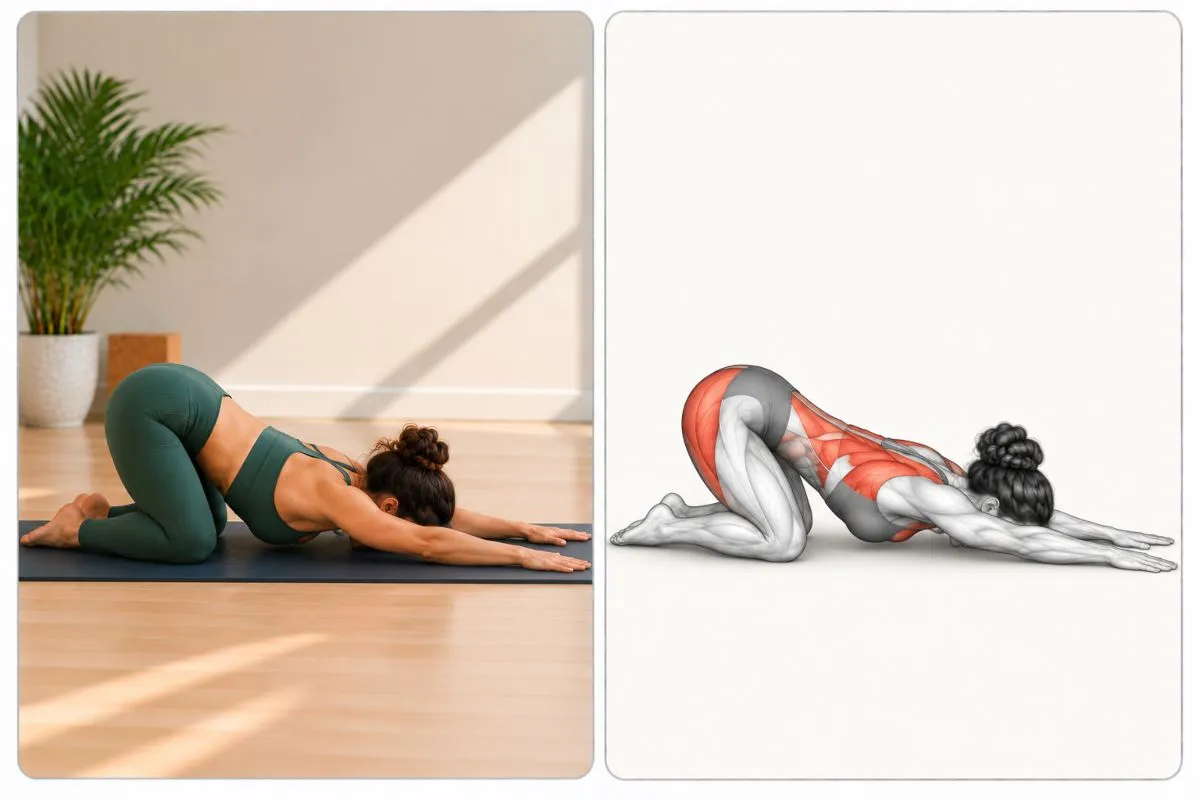
18. Melting Heart Pose
Start on hands and knees, then walk the hands forwards while allowing the chest to move gently towards the mat. Keep the hips approximately above the knees.
Also known as Anahatasana, this posture explores shoulder and upper-back movement. Support the chest or forehead when needed.
- Suggested beginner hold: 1–2 minutes.
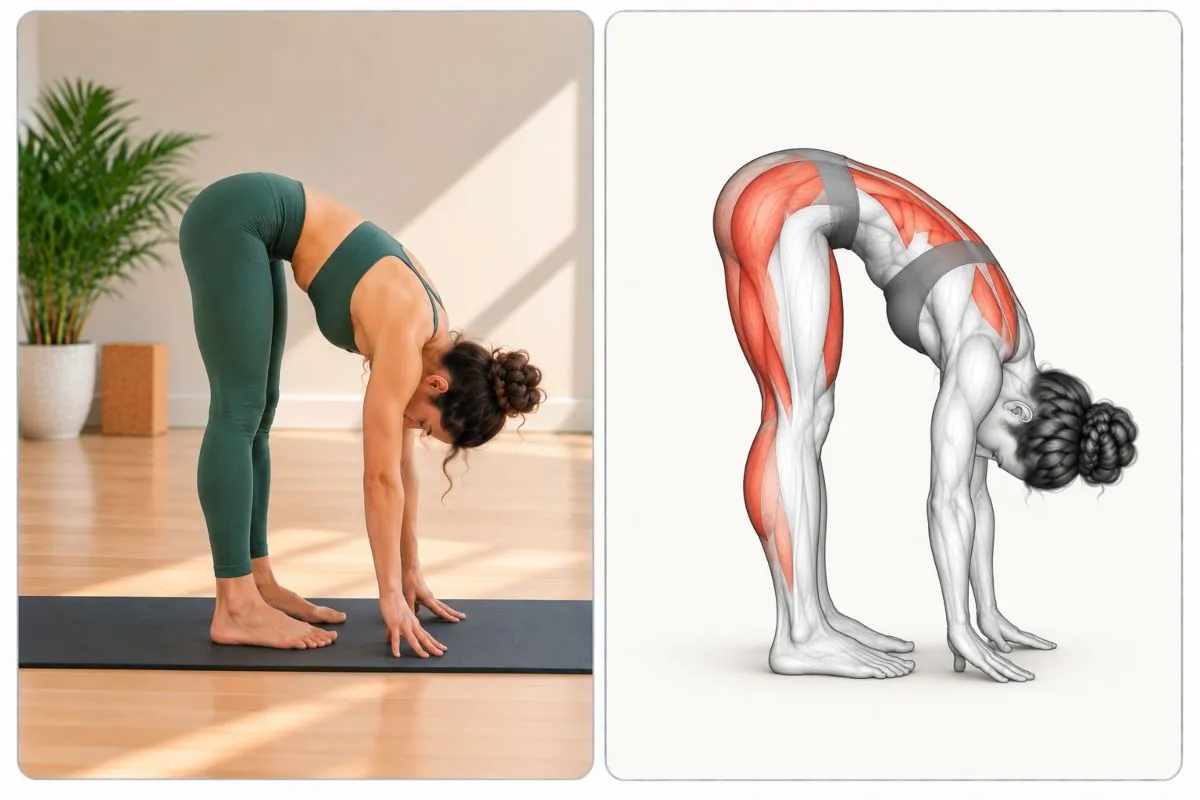
19. Dangling Pose
Stand with the knees softly bent and fold forwards from the hips, allowing the upper body to relax. Support your hands on a chair or blocks if necessary.
Dangling provides a standing forward-fold variation. People prone to dizziness should return upright slowly.
- Suggested beginner hold: 30–60 seconds.
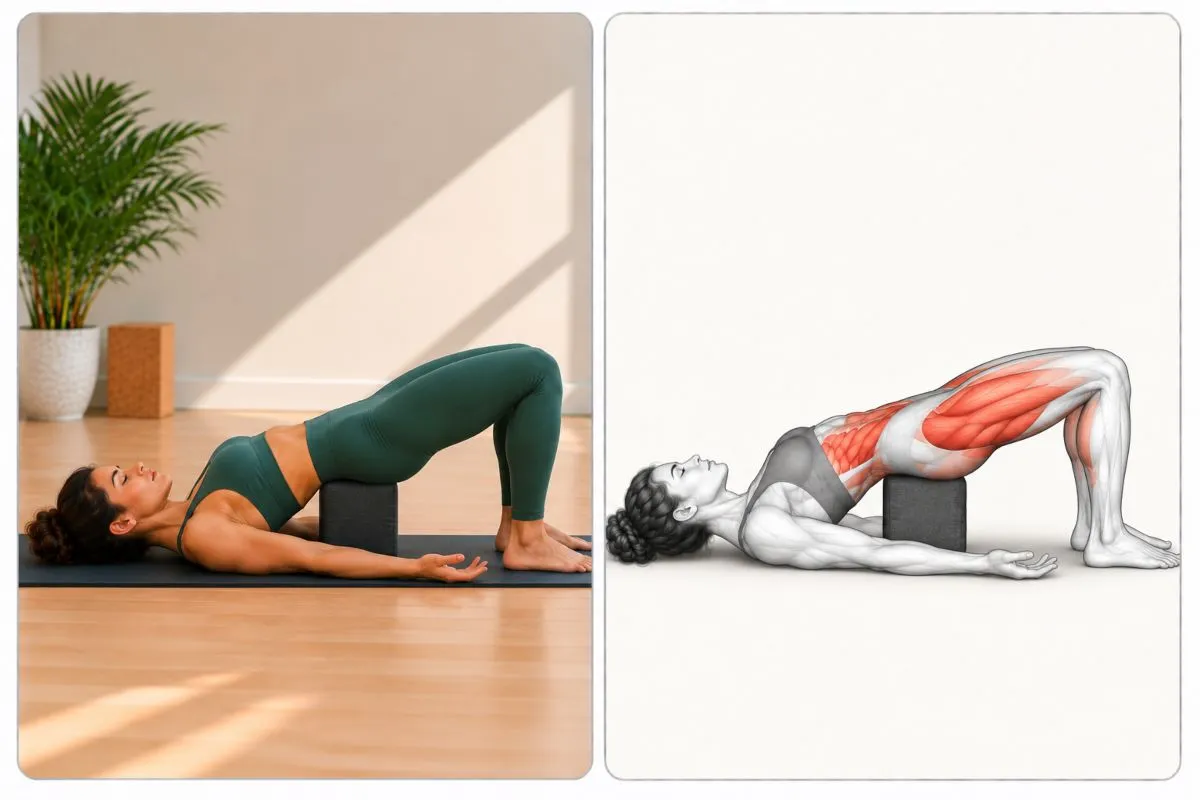
20. Supported Bridge Pose
Lie on your back with the knees bent and feet on the floor. Lift the pelvis slightly and position a stable yoga block at an appropriate height beneath the sacrum.
A supported version allows the body to rest in a gentle backbend without continuously engaging the lifting muscles.
- Suggested beginner hold: 1–2 minutes.
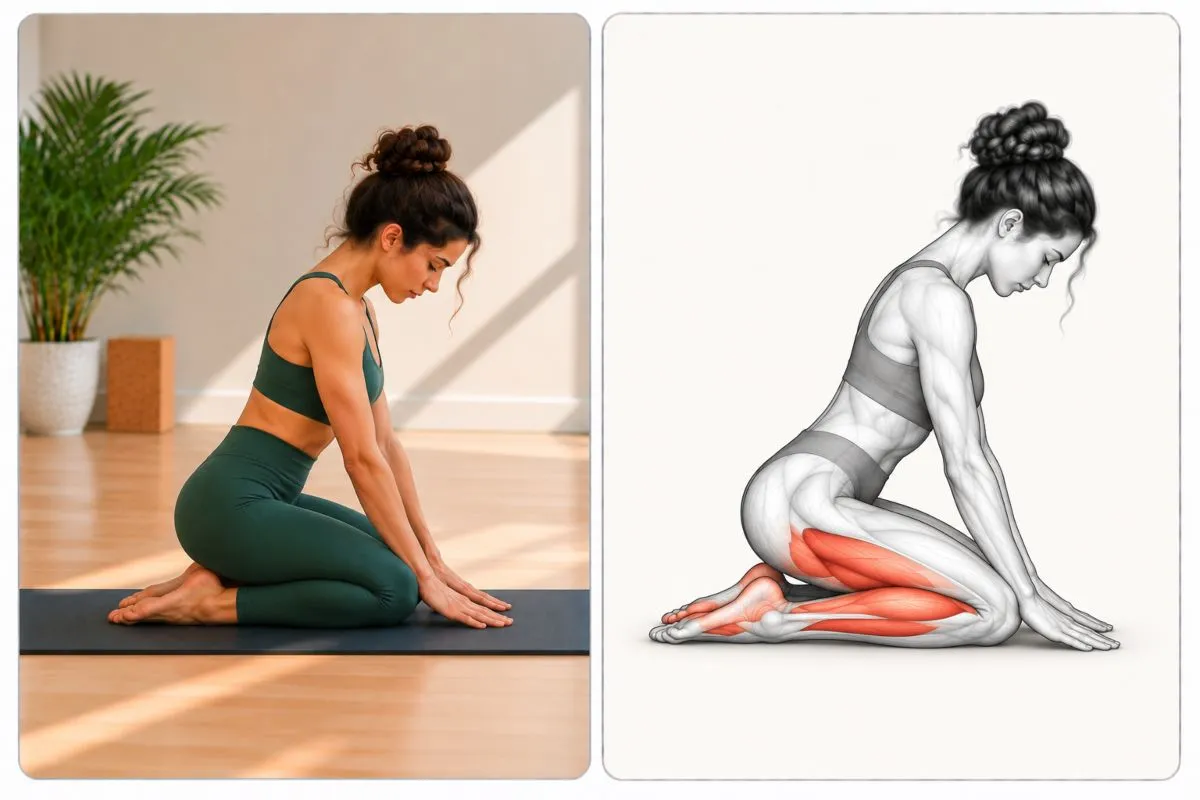
21. Ankle Stretch Pose
Kneel with the tops of the feet on the mat, using support beneath the knees or ankles if required. Remain in a comfortable upright position.
This pose explores the ankles and fronts of the feet. Avoid it if kneeling causes joint pain or uncomfortable pressure.
- Suggested beginner hold: 20–45 seconds.
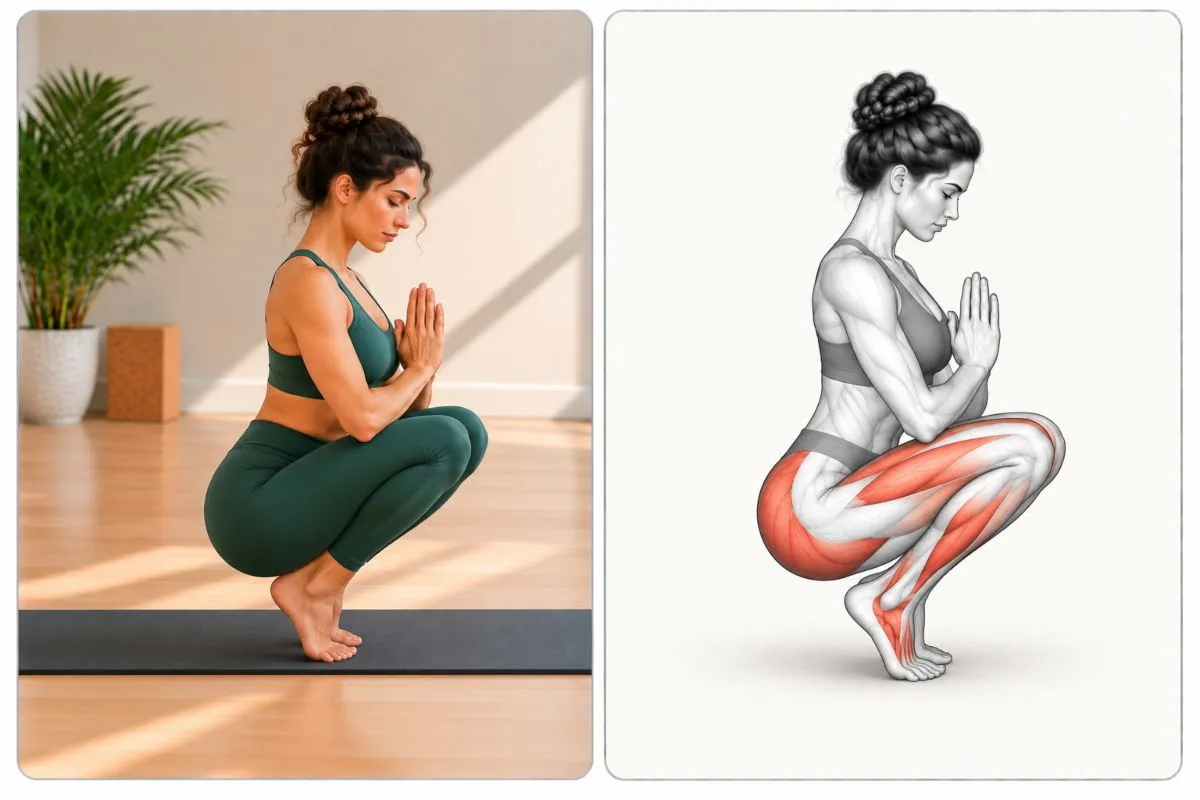
22. Toe Squat Pose
Kneel with the toes tucked beneath the feet, gradually allowing the body to rest towards the heels. Keep weight supported through the hands if needed.
Toe Squat introduces sensations through the soles of the feet and toes. Short, gentle holds are preferable to excessive pressure.
- Suggested beginner hold: 15–30 seconds.
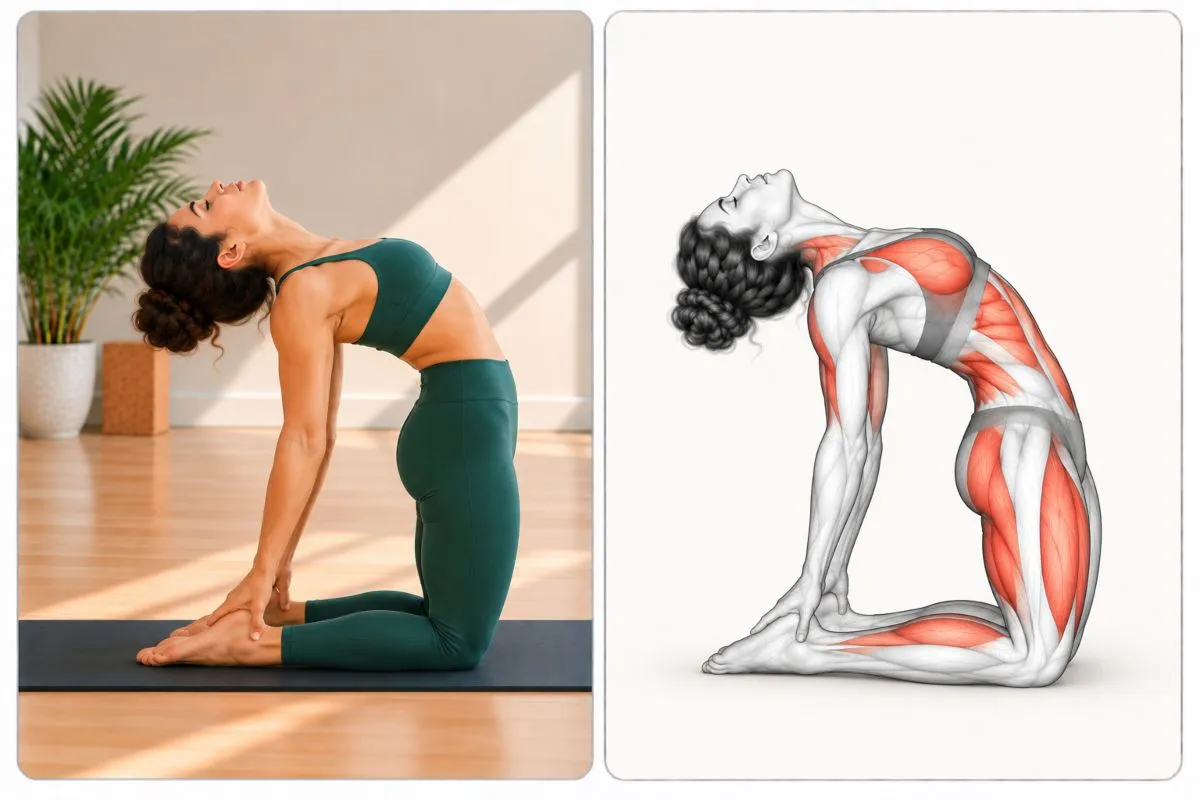
23. Camel Pose
Kneel upright with the hands supporting the pelvis or lower back. Gently lift the chest and introduce a small, controlled backward movement.
Camel is often an active yoga posture. A Yin-inspired version should remain supported and should not involve forcing the spine into a deep backbend.
- Suggested beginner hold: 20–45 seconds.
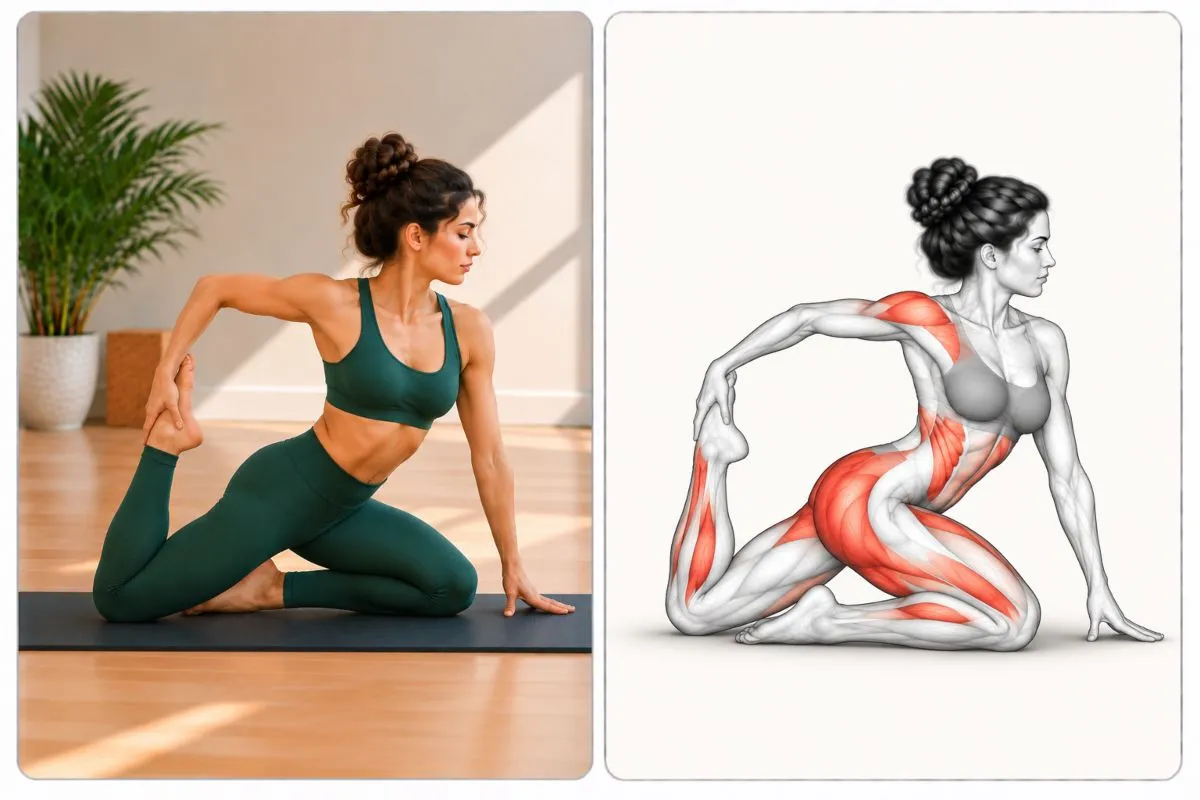
24. Cat Pulling Its Tail Pose
Lie on one side and bend the upper leg backwards, holding the ankle or using a strap if comfortable. The position may also include a gentle rotation.
This combines sensations around the front of the thigh with a controlled spinal twist. A simpler side-lying quadriceps stretch is suitable for beginners.
- Suggested beginner hold: 30–60 seconds per side.
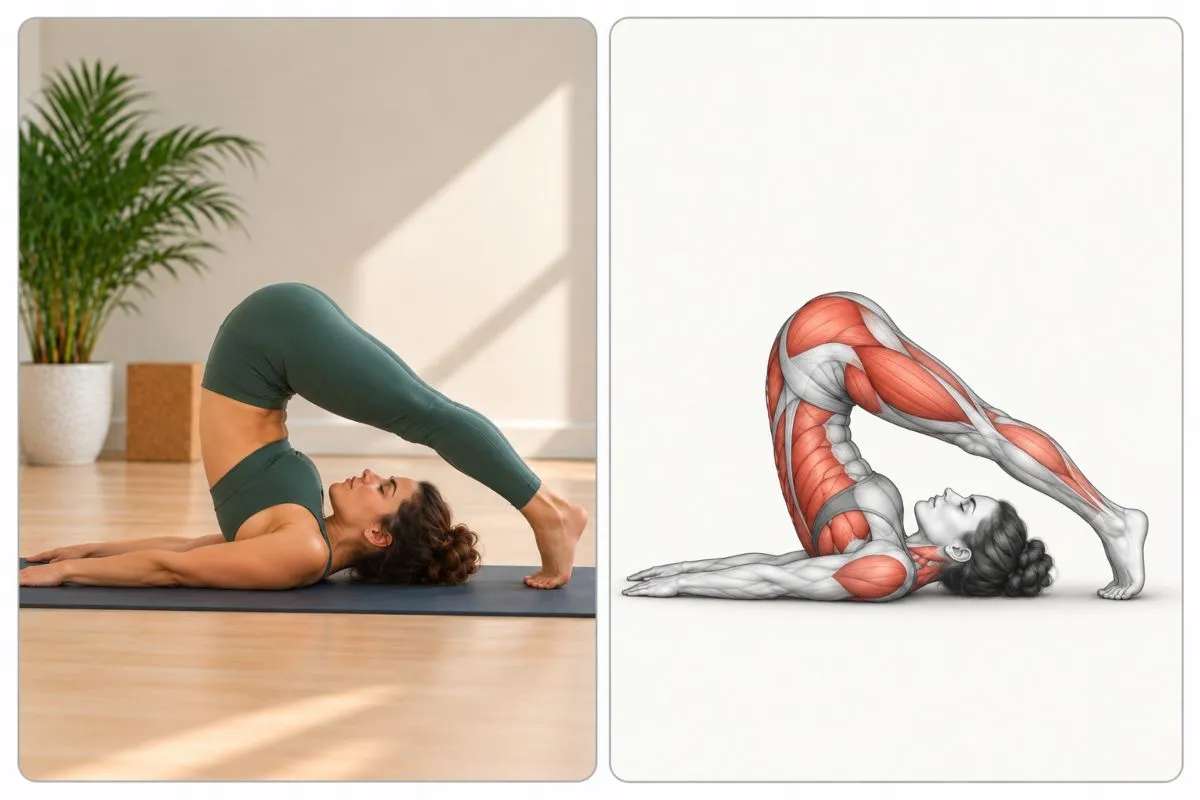
25. Snail Pose
Snail is an advanced forward-folding inversion related to Plough Pose, in which the legs move behind the head while the body rests on the shoulders.
Because it places substantial demands on the neck and spine, it should not be attempted from a diagram alone. Beginners should use Caterpillar or another supported forward fold instead.
- Suggested hold: Only under individual guidance from a suitably qualified instructor.
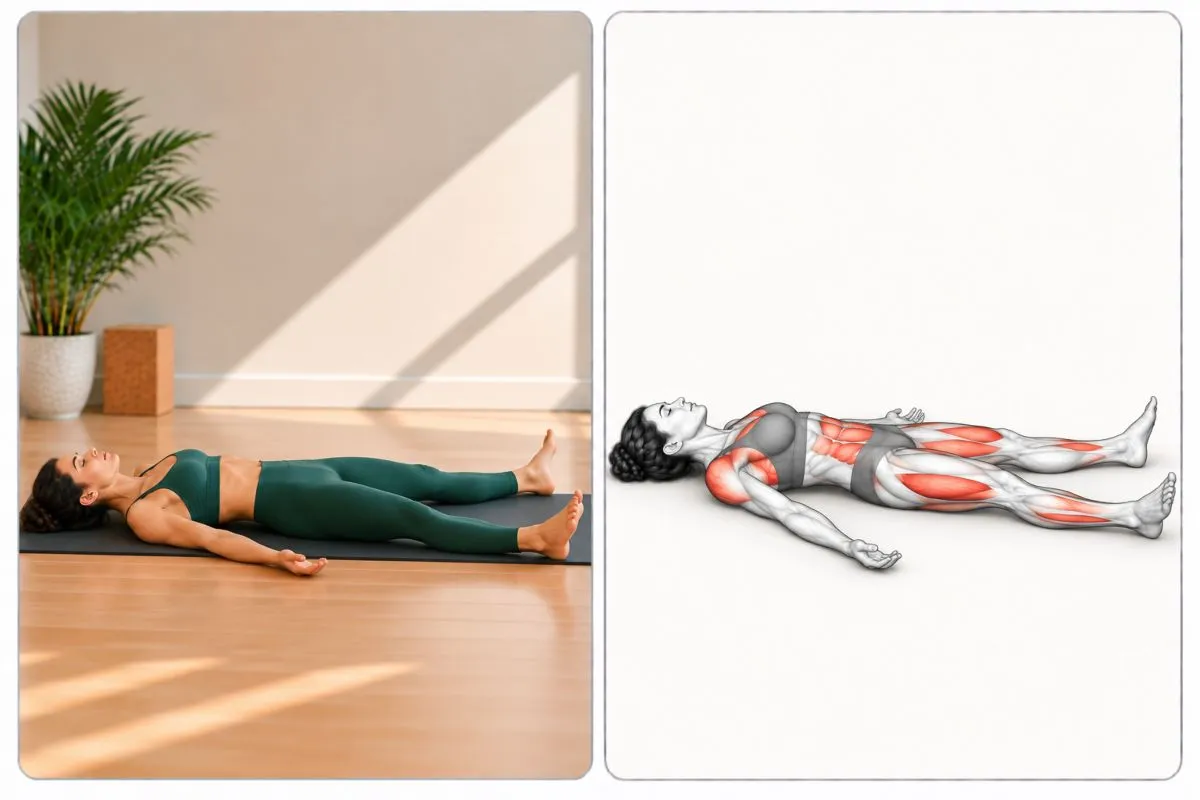
26. Savasana (Corpse Pose)
Lie comfortably on your back with the arms resting beside the body and the legs relaxed. Place a bolster beneath the knees or lie on your side if that feels better.
Savasana is a resting posture often included at the end of yoga sessions, allowing time for the body and breathing to settle.
- Suggested beginner hold: 3–5 minutes.
What is Yin Yoga Good for Within a Balanced Routine?
People often search for what is yin yoga good for when deciding whether slower movement deserves a place alongside conventional exercise.
Yin practice may be useful for people who want dedicated stretching time, a quieter movement experience or an opportunity to develop patience and body awareness.
It can complement walking, running, cycling, resistance training and more active yoga styles. However, Yin Yoga alone does not provide every component of physical fitness, and longer holds should not be mistaken for a guaranteed way to prevent injuries or treat joint disorders.
For someone who works at a desk throughout the week, a brief Yin session may offer a welcome change from prolonged sitting. For an active person, it can provide a quieter form of movement between more demanding training sessions.
The most useful approach is to choose comfortable postures and practise consistently rather than trying to achieve dramatic flexibility improvements quickly.
How to Structure a Yin Yang Yoga Session
A combined yoga session does not need to follow an elaborate routine. A shorter class can include a gentle warm-up, active movement, passive stretching and a final period of relaxation.
Here is an example of a 45-minute beginner-friendly class.
|
Stage |
Duration |
Suggested activity |
|
Arrival and breathing |
5 minutes |
Comfortable seated position and relaxed breathing |
|
Gentle warm-up |
5 minutes |
Shoulder movements, Cat-Cow and easy mobilisation |
|
Yang sequence |
15 minutes |
Modified Sun Salutations, standing lunges and balancing |
|
Yin sequence |
15 minutes |
Supported Butterfly, Sphinx, Reclining Twist and other comfortable holds |
|
Final relaxation |
5 minutes |
Savasana or supported resting |
This structure can be adapted for different fitness levels. Someone completely new to yoga might spend less time in challenging standing sequences and use shorter Yin holds.
A more experienced practitioner may choose a longer session, but there is no requirement to complete every pose in a single practice.
Should You Practise Yin Before Yang?
Both arrangements are used, and each can serve a different purpose.
Starting with Yin may suit a slow, reflective session where the intention is to develop concentration before moving. However, long stretches should be approached carefully, especially when the body has not yet been moving much.
Starting with Yang may feel more natural for those who prefer to warm up through active movement and then finish with gentler stretches.
For many beginners, a sensible option is to begin with light mobilisation, introduce a manageable period of Yang movement, and finish with supported Yin poses.
Can Beginners Practise Yin Yang Yoga?
Yin Yang Yoga can be suitable for beginners when the class offers appropriate modifications and the teacher provides clear guidance.
The most important consideration is not whether someone can achieve the full appearance of a pose. It is whether they can practise with comfortable alignment, controlled effort and manageable sensations.
A beginner should expect variation in flexibility and strength. Some positions may feel straightforward, while others require additional support or a different movement altogether.
Useful equipment includes a non-slip yoga mat, firm cushions, a folded blanket, yoga blocks and a bolster. These props are not signs of limited ability. They help make positions more accessible and reduce unnecessary strain.
A beginner-friendly class should also explain how to enter and leave postures safely, provide alternatives and allow participants to rest whenever necessary.
Common Mistakes to Avoid During Yin Yang Yoga
One common misunderstanding is that longer Yin holds must produce strong stretching sensations. In reality, excessive intensity can make a posture uncomfortable and may increase the risk of injury.
Another mistake is treating Yang movement as a competition. Moving quickly through unfamiliar poses can compromise balance and control, particularly when fatigue develops.
Practitioners may also neglect the transitions between positions. Coming out of a long-held stretch abruptly can feel uncomfortable, so it is sensible to move slowly and give the body time to adjust.
Breathing should remain natural throughout the practice. There is generally no reason to force extremely deep breaths or hold the breath for prolonged periods.
Finally, avoid copying the exact posture shown by another practitioner. Differences in anatomy, previous injuries and joint mobility mean that a comfortable position will not look identical for everyone.
Is Yin Yang Yoga Safe for Everyone?
Yoga is generally considered safe for many healthy adults when practised appropriately, but no style is entirely risk-free.
People with existing injuries, significant joint problems, spinal conditions or other relevant medical concerns should seek individual guidance before attempting demanding positions.
Pregnant practitioners may need modifications, particularly in positions involving pressure on the abdomen, balance challenges or prolonged lying on the back later in pregnancy.
People with osteoporosis, hypermobility, recent surgery, glaucoma or persistent pain may also need to avoid or substantially modify particular poses.
A qualified instructor can help identify appropriate alternatives, although medical assessment may still be necessary.
A useful safety rule is to distinguish mild stretching sensations from pain. Sharp discomfort, tingling, numbness, dizziness or joint instability are reasons to stop and reassess the position.
How Often Should You Practise Yin Yang Yoga?
For beginners, one or two sessions per week may provide a manageable starting point. The ideal frequency depends on existing activity levels, physical capacity and individual goals.
Practising more often is not automatically better, particularly if sessions involve challenging movements or intense stretches.
The UK’s Chief Medical Officers recommend that adults undertake activities that maintain or improve muscular strength on at least two days each week, alongside regular aerobic activity.
A sufficiently challenging Yang component may contribute towards muscle-strengthening goals. However, a gentle Yin-focused session should not be assumed to meet aerobic activity recommendations.
For general wellbeing, Yin Yang Yoga is best viewed as one part of a varied routine that may also include walking, cycling, swimming or other appropriate exercise.
Does Yin Yang Yoga Burn Calories?
A frequent question is does yin yoga burn calories, particularly among people comparing yoga with more energetic forms of exercise.
All physical activity involves energy expenditure, but the amount varies according to body size, duration, intensity and individual factors.
The slow, passive nature of Yin Yoga generally involves less energy expenditure than continuous dynamic movement. The Yang section may require greater effort, depending on the intensity of the sequence.
However, there is no reliable universal calorie figure for a Yin Yang session. A class with gentle standing movements will differ considerably from one containing challenging flows and sustained muscular work.
For people primarily interested in cardiovascular fitness or energy expenditure, Yin Yang Yoga can complement other activities rather than replace them.
Its wider value lies in bringing movement, strength, stretching and mindful rest into a single practice.
Yin Yang Yoga Compared with Other Popular Yoga Styles
Choosing a yoga class can be confusing because studios frequently use overlapping names.
Hatha Yoga is a broad term often associated with physical postures, breathing and controlled movement. Classes can range from very gentle to physically demanding.
Vinyasa Yoga places greater emphasis on transitions between poses, commonly linking movement with breathing. It is generally more dynamic than a predominantly Yin-focused class.
Restorative Yoga uses extensive support to encourage comfortable rest, often with little intention of creating significant stretching sensations. Yin Yoga, by comparison, may involve gentle, sustained stretching.
Some studios also advertise VinYin classes, a term commonly used for sessions that combine an active Vinyasa sequence with passive Yin positions.
The exact class format depends on the teacher. Reading a description or asking about the expected intensity can help determine whether a session suits your needs.
Choosing Yin Yang Yoga Classes in the UK
When looking for a class, consider more than the name or advertised difficulty level.
UK studios may offer Yin Yang sessions in person, through live online teaching or as recorded classes. Class lengths and the proportion of Yin to Yang movement vary between providers.
For beginners, look for instructors who explain modifications, use appropriate props and encourage participants to respect physical limitations.
It is also worth asking whether the teacher has relevant yoga training, insurance and experience teaching people with different mobility levels.
Yoga instruction is not regulated through a single compulsory national licensing system in the UK, so checking a teacher’s qualifications and experience can be especially useful.
If you prefer practising at home, choose a class offering clear demonstrations rather than attempting unfamiliar advanced poses without supervision.
Exploring Yin Yoga Training and Teacher Development
Anyone interested in yin yoga training should look beyond the number of course hours advertised.
A worthwhile programme should address anatomy, individual variation, safe sequencing, the appropriate use of props and the limitations of prolonged stretching.
It should also distinguish traditional philosophical concepts from modern anatomical or scientific explanations.
Yin teachers often discuss meridians and the movement of qi, concepts associated with traditional Chinese medicine. These ideas can form part of the philosophical framework, but claims about specific energy channels treating diseases or restoring organ function are not established medical facts.
For aspiring teachers, supervised practice and the ability to adapt postures for different bodies are particularly important.
Making Yin Yang Yoga Part of Everyday Life
A balanced practice is easier to maintain when it fits naturally into an existing routine.
Someone working from home may prefer a short morning Yang sequence to encourage movement before sitting at a desk. A slower evening session could include supported Yin stretches and a few minutes of relaxed breathing.
Others may prefer one longer class at the weekend rather than several short sessions throughout the week.
The goal is not to create another demanding obligation. Consistency, comfort and enjoyment matter more than following an unnecessarily complicated schedule.
At Tula Balance, the idea of balance can be approached as a practical part of everyday wellbeing: recognising when movement is useful, when rest is needed and how both can contribute to a sustainable routine.
Conclusion
Yin Yang Yoga offers an approach to exercise that acknowledges the importance of both effort and recovery. By combining active movement with slower, supported postures, it gives practitioners opportunities to develop strength, explore flexibility and practise mindful attention.
Its greatest advantage is adaptability. A session can be energetic without becoming exhausting, or deeply calming without excluding movement altogether.
Whether you are beginning yoga for the first time or looking to add variety to an existing routine, the key is to practise within your capabilities, choose suitable guidance and allow progress to develop gradually.
Ultimately, Yin Yang Yoga is not about achieving a perfect balance in every session. It is about learning to recognise the value of movement and stillness, then making room for both in everyday life.